Is Investing in CS2 Skins Worth It? An Honest Answer
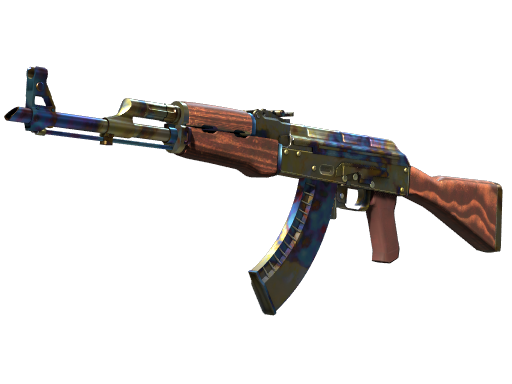
Is investing in CS2 skins worth it? Honestly: only with money you can afford to lose, only in the items scarcity cannot reproduce, and only if you accept there is no protection if it goes wrong. Skins have made some collectors real money, but they are a volatile, illiquid, unregulated market that lost over $2 billion in a single day in October 2025. Treat them as collectibles you enjoy that might appreciate, not as a savings account.
This is a record book, not a financial adviser, and the records themselves are the warning as much as the temptation. Here is the case both ways, and what actually held value when the market broke.
The case for skins as an asset
The strongest argument is the track record of frozen-supply items. A Contraband M4A4 Howl, a Katowice 2014 Holo sticker or a top blue-gem pattern has appreciated over years because supply is fixed or shrinking while the player base grows. Unlike a stock, you can also use and display the thing you own, and for mid-tier items there is genuine liquidity — established marketplaces move them daily. If you were going to spend the money on the hobby anyway, buying the durable end of it is defensible.
The most expensive CS2 skins board is, in one sense, a list of the assets that worked: almost every record item is defined by a scarcity the game cannot manufacture.
The case against
The case against is the October 2025 crash. In a single day, a rules change most investors never saw coming halved the knife and glove market and erased over $2 billion — no earnings miss, no macro shock, just a patch. The full account is in the CS2 skin market crash explained. There is no regulator, no deposit insurance, and no appeal if a marketplace freezes withdrawals or shuts down, as BitSkins did in June 2026. Top items are so illiquid that the “price” is often just the lowest ask nobody has met yet.
Liquidity is the risk people underestimate most. A $200 skin sells in minutes; a $50,000 grail might sit for months, and the only way to sell it fast is to accept a steep discount to the “market price” you were quoting to yourself. The market cap figures on the CS2 skin market cap over time page sum a lot of these thin, aspirational asks, which is why the real, sellable value of the market is somewhat below its headline number — and why your own inventory is worth less in a hurry than the tracker says.
What actually held value
The crash was a live stress test, and it produced a clear result: items whose scarcity a trade-up could not reproduce held or gained, while craftable cosmetics halved. Pattern-locked phases, low-float finishes, Contraband and tournament stickers came through; ordinary knives and gloves did not. If you take one rule from the whole market, it is to pay for the kind of rarity described in the rarest CS2 skins, and to be sceptical of anything the game can print more of.
The regulatory cloud
The legal picture is darkening, and it matters for anyone holding skins as value. In December 2025 Valve banned sponsors that interact with players' inventories from licensed events, and in February 2026 the New York Attorney General sued Valve over loot-box gambling, explicitly citing third-party resale platforms. None of this bans buying or selling skins, but it signals that the informal, lightly-regulated trading economy is under scrutiny, and that platform risk is real.
Platform failure is not hypothetical either. BitSkins, an established marketplace, shut down in June 2026, citing VAT, regulation and Steam API limits, and SkinBid went bankrupt in late 2025 before its assets were absorbed by a rival. Each closure stranded users mid-transaction or forced a scramble to withdraw. The lesson is to keep valuable items in your own Steam inventory rather than parked on a marketplace balance, and to assume any single platform could disappear — a risk that has no equivalent for a regulated brokerage.
If you still want to
If you go in, three rules keep it sane. Buy only what you would be content to hold forever, because you may have to. Concentrate on frozen-supply rarity, not craftable cosmetics. And use established marketplaces with escrow and float data rather than private trades with strangers. Do that and skins are a hobby that might reward you; ignore it and they are a fast way to learn what illiquidity means.
It also helps to size the position honestly. Treat skins the way you would treat any collectible — art, watches, trading cards — as the speculative, illiquid corner of a wider picture, never as the core. The collectors who enjoy this market are the ones who bought things they loved and were relaxed about the price; the ones who got burned treated a video-game cosmetic like a savings vehicle and discovered, on a Tuesday in October, that a patch note can be a margin call. The records on the most expensive CS2 skins board are thrilling to read, but every one of them is a reminder that the biggest numbers live in the least liquid, least protected part of the market.
Record questions
Are CS2 skins a good investment?
Can you lose money on CS2 skins?
Which skins hold value best?
Is buying skins regulated?
Back to the record: the most expensive CS2 skins, ranked, or the CS2 skin market cap over time.